
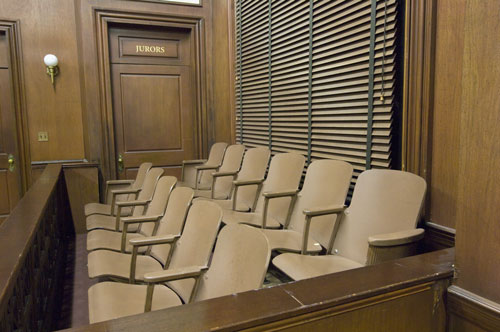
On February 24, 2026, a unanimous New Jersey Supreme Court decided the Gloucester County case of State v. Walter Giliano. The principal issue concerned whether the defendant was denied his right to a jury that represented a fair cross-section of the community.
Chief Justice Rabner wrote for the Court in relevant part: By order dated January 21, 2026, the Court directed that defendant Walter Gilliano’s trial resume with the jury panel that had already been summoned. This opinion states the reasons for that ruling.
Defendant’s trial was scheduled to begin with jury selection on January 13, 2026. Notices had been sent to potential jurors about eight weeks earlier, consistent with ordinary practice. Out of the 801 prospective jurors, nine responded to a prescreening questionnaire that they had been convicted of an indictable offense. Under state law, “every person summoned as a juror shall not have been convicted of any indictable offense under the laws of this State, another state, or the United States.” N.J.S.A. 2B:20-1(e). The nine individuals were therefore excused from service.
On January 11, 2026, two days before jury selection, Governor Philip D. Murphy signed Executive Order 411 (EO 411), which granted clemency — to the extent needed to restore the ability to qualify for jury service — to certain individuals with a conviction of an indictable offense. Following the Executive Order, the State asked the court to strike the existing jury pool and summon a new one, or to direct the nine individuals who had been disqualified to appear for jury selection the next day. The Presiding Judge of the Criminal Division denied the requests.
The State almost certainly made this request to avoid giving the defense a potential issue to appeal. If those nine jurors were directed to appear the next day, it is substantially certain that one of four things would have occurred: (1) some or all would have not appeared and jury selection would have continued; (2) those that appeared would have been struck from the panel for cause by either side; (3) those that appeared would have been struck by peremptory challenge; or some r all f them would have been empaneled with the consent of the parties. At that point, the State would have no issue proceeding and the defense would have no related issue for appeal.
The Court continued in relevant part: The parties filed for emergent relief before the Court on January 14, and the Court asked for expedited briefing and additional information on certain points. Defendant argues that EO 411 implicates his constitutional right to a fair and impartial jury selected from a representative cross-section of the community; that including individuals who have been convicted of an indictable offense remediates “established exclusions of minority racial groups” from jury service; and that EO 411 must apply to ongoing jury selections conducted immediately after the order was issued.
Because defendant could not establish that the existing jury pool violated his right to trial by a jury drawn from a representative cross-section of the community, the Court agrees with the trial court’s determination not to dismiss the jury pool that had been summoned before the Governor issued EO 411. To establish a violation of the fair-cross-section requirement, defendants must (1) “identify a constitutionally cognizable group”; (2) “prove substantial underrepresentation over a significant period of time”; and (3) “show discriminatory purpose.” State v. Dangcil (2021). If a defendant establishes all three prongs, the State must demonstrate “that a significant state interest is manifestly and primarily advanced by those aspects of the jury selection process that result in disproportionate exclusion of the distinctive group.”
A “constitutionally cognizable group” “must be one that has been historically excluded, based on stereotypical prejudices, from full participation in the significant duties and privileges of American citizenship.” The group defendant points to is limited to (1) individuals granted clemency for convictions of an indictable offense (2) under New Jersey law, (3) which occurred on or before January 10, 2026, (4) who have satisfied the non-monetary aspects of their sentences. The group identified in EO 411, therefore, is not readily defined by the principles recounted above. It is a specific group of individuals with New Jersey convictions for indictable offenses during a particular time frame.
As to the second prong, the record in this appeal refers to nine individuals who were excluded from the jury pool because they reported they had an indictable conviction. Although defendant and the Public Defender presented data about racial disparities in the rate of incarceration, the present record does not contain proof of underrepresentation of a cognizable group within jury pools drawn from the community for a substantial period.
Third, defendant contends that the group’s lack of representation is due to systematic exclusion. The Court reviews the neutral process of summoning jurors and notes that defendant has not identified any discriminatory animus in the ordinary procedures followed. Defendant has not carried his burden to establish a violation of the fair-cross-section requirement. His claim under the Sixth Amendment thus cannot prevail.
Jury management offices could not anticipate the terms of EO 411 weeks or months in advance. Even if they could, play in the joints of the jury-selection process is necessary to accommodate the practical problems of judicial administration. Otherwise, for example, defendants might argue that a constitutional violation can be found because individuals turned eighteen years old weeks or months after jury summonses had been sent. Moreover, nothing in the Executive Order, including the fact that it took effect immediately, suggests the Governor intended to halt all criminal jury trials statewide for two months. The Court reviews the steps the Administrative Office of the Courts (AOC) has taken to implement EO 411 and asks the Director of the AOC to continue to monitor the current process to summon jurors and make any additional administrative changes that may be needed. The request for emergent relief is denied.