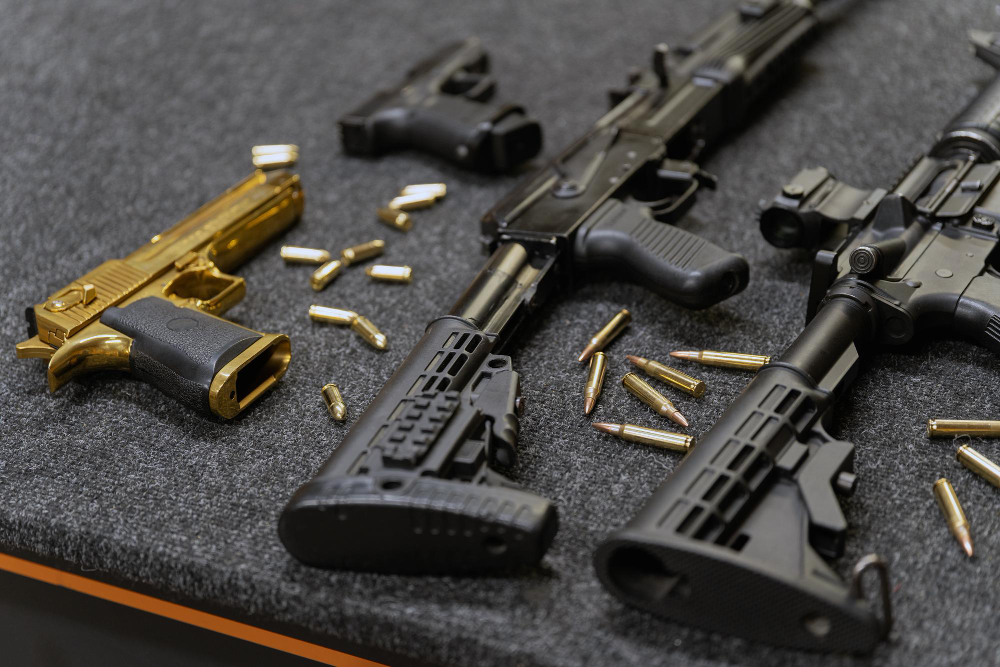
On July 17, 2026, the Third Circuit Court of Appeals decided the case of Association of New Jersey Rifle and Pistol Clubs v. Attorney General of New Jersey. The principal issue concerned the constitutionality of New Jersey’s ban on assault firearms and “large capacity magazines.”
In a 10-5 decision, Judge Freeman ruled that New Jersey’s “assault firearms” and “large capacity ammunition magazine” ban under N.J.S.A. 2C:39-5(f) are unconstitutional. Subsection f forbids the possession of assault firearms unless they are specially registered or made inoperable and the inoperability is certified in a form filed pursuant to N.J.S.A. 2C:58-13. Possession of the weapon, even if it is actually inoperable was illegal if the form had not been filed. State v. Elrose (App. Div. 1994). The provision forbidding possession of assault rifles has been construed as not requiring knowledge that the rifle was in the prohibited class. State v. Pelleteri (App. Div. 1996).
The majority ruled that New Jersey’s bans on semi-automatic “assault firearms” (such as AR-15s) and large-capacity magazines holding over 10 rounds violate the Second Amendment. The historic decision marked the first time a federal appeals court struck down a state-level assault weapons ban.
The majority held that commonly owned semi-automatic rifles and standard-capacity magazines are protected arms because millions of law-abiding Americans possess them for lawful purposes like self-defense. It likened New Jersey’s restrictions to the handgun ban struck down in District of Columbia v. Heller, because narrow exemptions and unattainable licensing made civilian possession very difficult or impossible. The Attorney General failed to meet its burden under New York State Rifle & Pistol Association v. Bruen to show a founding-era historical tradition of restricting commonly kept, non-dangerous and non-unusual arms.
A natural counter-argument to the founding-era tradition analysis is that assault weapons and large-capacity magazines like the ones at issue did not exist in the founding-era. The minority of judges could also argue that focusing on what people commonly possess allows the proverbial tail to wag the dog in that people only commonly-possess what is not prohibited by law. The Attorney General is asking that these particular forearms and magazines be prohibited by a law that has been in place for years.
The majority ruling is at odds with six other federal circuits that upheld similar regional firearm bans. The United States Supreme Court is expected to decide the legality of similar bans in other States during their term in the summer of 2027.
In dissent, Judge Schwartz opined that semi-automatic rifles fall outside Second Amendment bounds because of their combat origins, military history, and high rates of criminal use, including mass shooting. Separate dissents were also filed by Judges Krause, Smith, and Chung.
A magazine is considered “large capacity” in New Jersey with regard to semi-automatic firearms if it holds 11 or more rounds. For semi-automatic shotguns, a fixed magazine holding more than six rounds if prohibited. Tubular devices holding only .22 caliber rimfire ammunition is exempt from New Jersey’s “large capacity” prohibition. Rimfire ammunition is generally cheaper and less accurate than centerfire ammo.