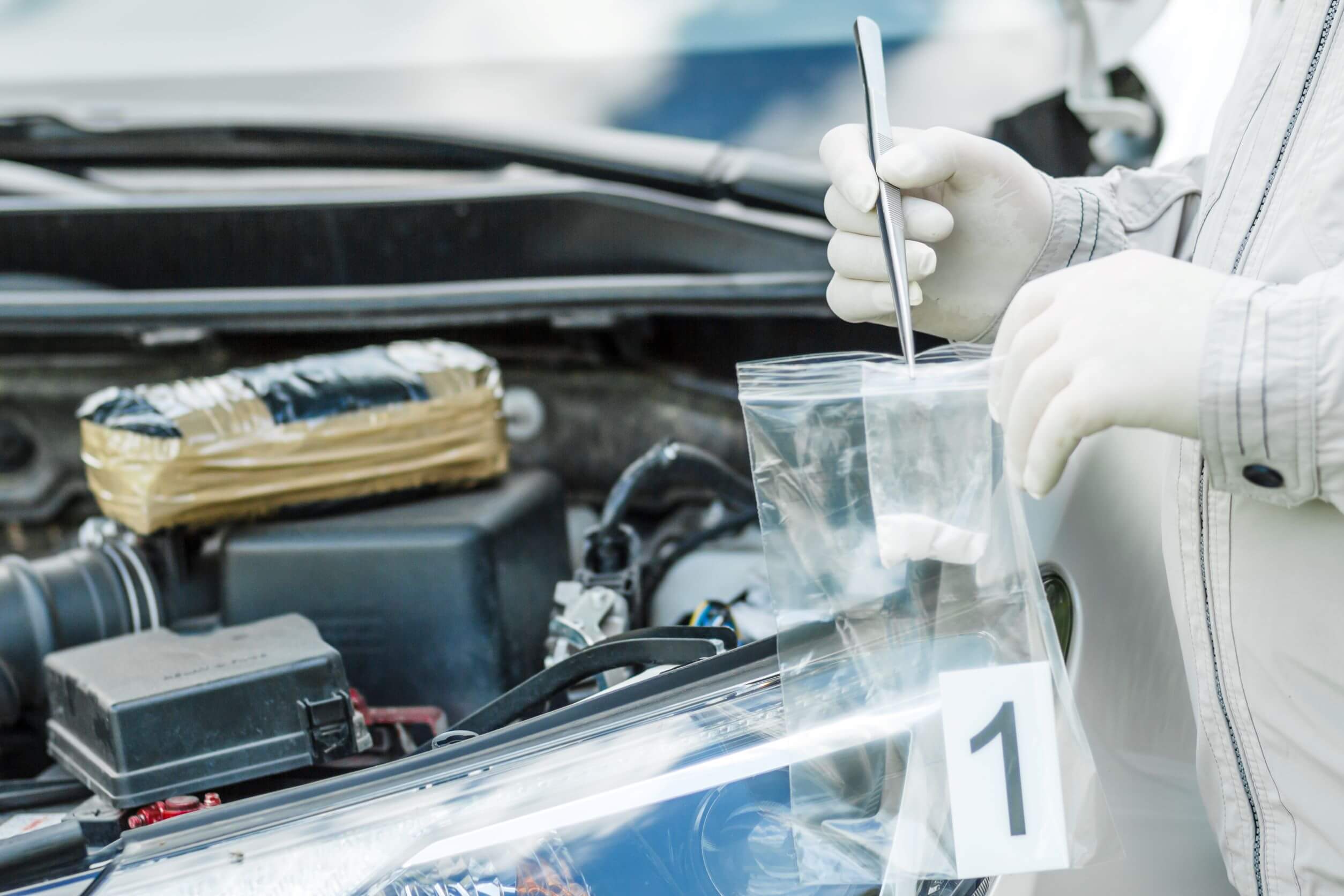
On July 30, 2025, the New Jersey Supreme Court decided the Salem County case of State v. Shawn Fenimore. The principal issue concerned the automobile exception to the warrant requirement under the New Jersey State Constitution.
Justice Wainer Apter wrote for the unanimous Court in relevant part: In this appeal, the Court considers whether the warrantless search of a car was consistent with the State Constitution when the car was parked in a State Police barracks parking lot; police had arrested the driver, removed the passenger, and obtained the keys; and the car was subject to imminent, mandatory impoundment. In response to a request for a statement regarding a harassment claim against him, defendant Shawn M. Fenimore arrived at the Woodstown State Police barracks shortly before 8:30 p.m. on June 2, 2021. New Jersey State Police Trooper Daniel Radetich interviewed defendant and administered three sobriety tests. Defendant failed two of them, and Radetich arrested defendant for driving while intoxicated (DWI) at approximately 8:57 p.m.
Radetich secured defendant to a holding cell bench and advised him that troopers would search his car. Radetich and four troopers found Nicholas Luzzo asleep in the passenger seat. One trooper escorted Luzzo into the police station. Troopers commenced a warrantless search of the car at 9:02 p.m. and found drugs, a loaded gun, and other evidence such as bolt cutters. Defendant was charged with possession offenses and moved to suppress the evidence discovered during the warrantless search of the car.
At the motion hearing, Radetich testified to the sequence of events described above. During cross examination, Radetich agreed that under John’s Law, troopers were required to impound defendant’s car after his arrest for DWI, “so, this car wasn’t going anywhere for at least twelve hours.” When asked why he did not secure a warrant, Radetich stated that “that’s our standard process. When you’re arrested for John’s Law, we have the right to a probable cause search of their vehicle.” The trial court denied the motion. Defendant pled guilty and appealed. The Appellate Division affirmed. The Court granted certification.
Under the circumstances presented here, the automobile exception to the warrant requirement did not apply and the police were required to obtain a warrant before searching the car. The automobile exception to the warrant requirement under the New Jersey Constitution is significantly more protective of motorists’ privacy interests than its federal counterpart. The Court has identified several rationales that support New Jersey’s automobile exception, including (1) the risk of the loss or destruction of evidence; (2) the unacceptable risk of serious bodily injury and death to officers, drivers, and passengers from prolonged encounters on the shoulder of a crowded highway; (3) the risk that motorists may feel compelled to consent to warrantless searches of their vehicles, which may be made on less than probable cause; (4) the recognition that, in certain circumstances, the privacy intrusion occasioned by a prompt search based on probable cause is not necessarily greater than a prolonged detention of the vehicle and its occupants while the police secure a warrant; and (5) the undue burden and impracticability of requiring police to post a special police detail to guard the immobilized automobile while pursuing a warrant.
Under “John’s Law,” when a person has been arrested for DWI, law enforcement “shall impound the vehicle that the person was operating at the time of arrest” “for a period of 12 hours after the time of arrest.” N.J.S.A. 39:4-50.23. In State v. Witt, the Court explicitly “parted from federal jurisprudence that allows a police officer to conduct a warrantless search at headquarters merely because he could have done so on the side of the road.” It expressly noted that “whatever inherent exigency justifies a warrantless search at the scene certainly cannot justify the failure to secure a warrant after towing and impounding the car at headquarters when it is practicable to do so.” And it specifically concluded that, going forward, New Jersey’s “automobile exception” would be limited “to on-scene warrantless searches.” Here, there was no “on-scene search”: the car was searched in a police barracks parking lot, not on the scene of a motor vehicle stop or any other incident. And the facts make clear there was no other “inherent exigency” to “justify a warrantless search under the automobile exception.” Further, none of the rationales the Court has identified to support New Jersey’s more limited automobile exception apply to the factual setting of this case. Therefore, the warrant requirement established by the State Constitution remained.
The State likely argued that in this case, the state police barracks was “on scene.” The Court’s holding indicates that the “on scene” phrase used in Witt and its progeny referred to the vehicle’s location before it was brought to headquarters. In the very rare case that the defendant brings his vehicle to headquarters before his arrest, the vehicle’s location triggers the warrant requirement.